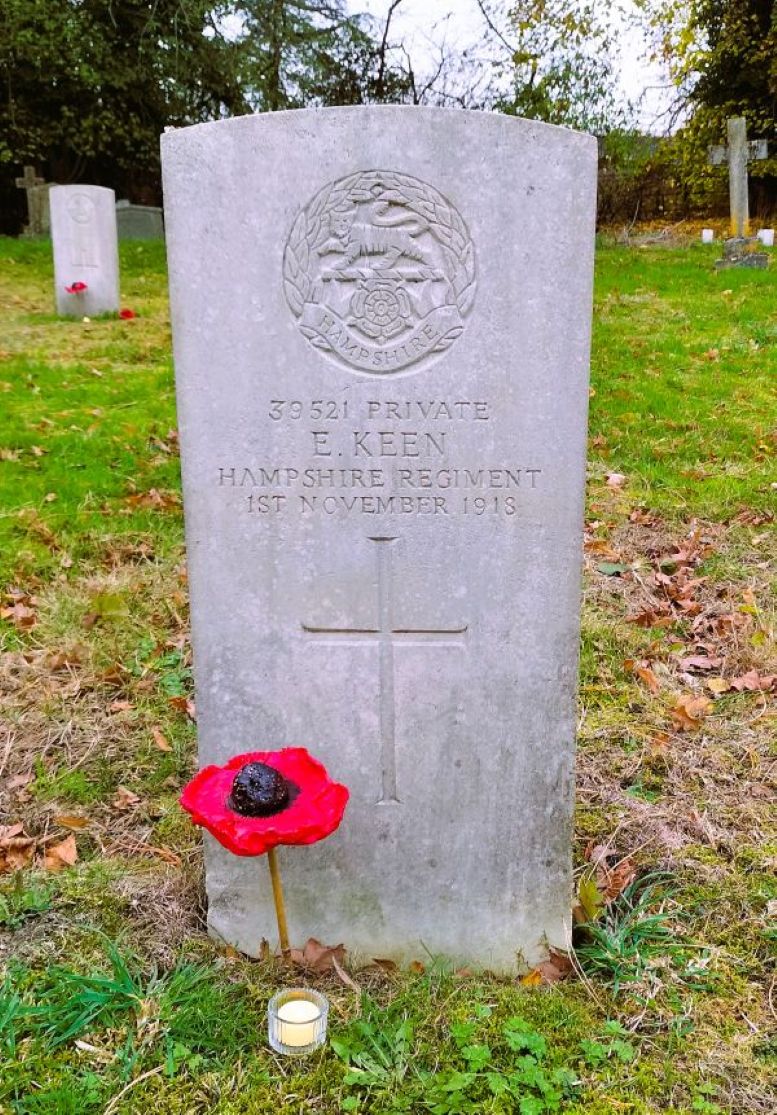
In Chipping Norton Cemetery on Worcester Road are 12 Commonwealth War Graves from both World Wars. These are the stories of the men who rest there. As part of this year's Remembrance we laid ceramic poppies,made by the students, crosses and tealights on their graves.
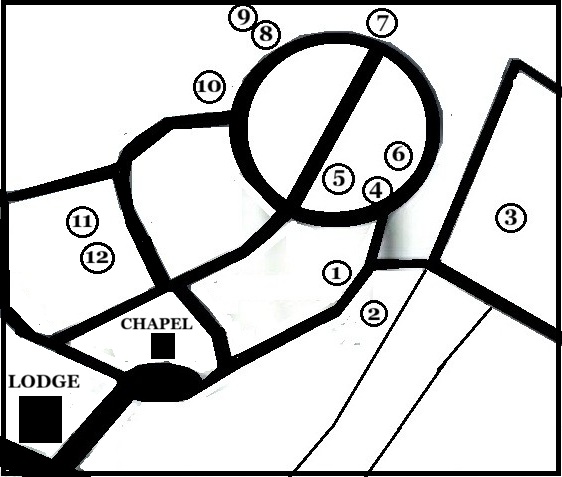
MAP OF THE WAR GRAVES
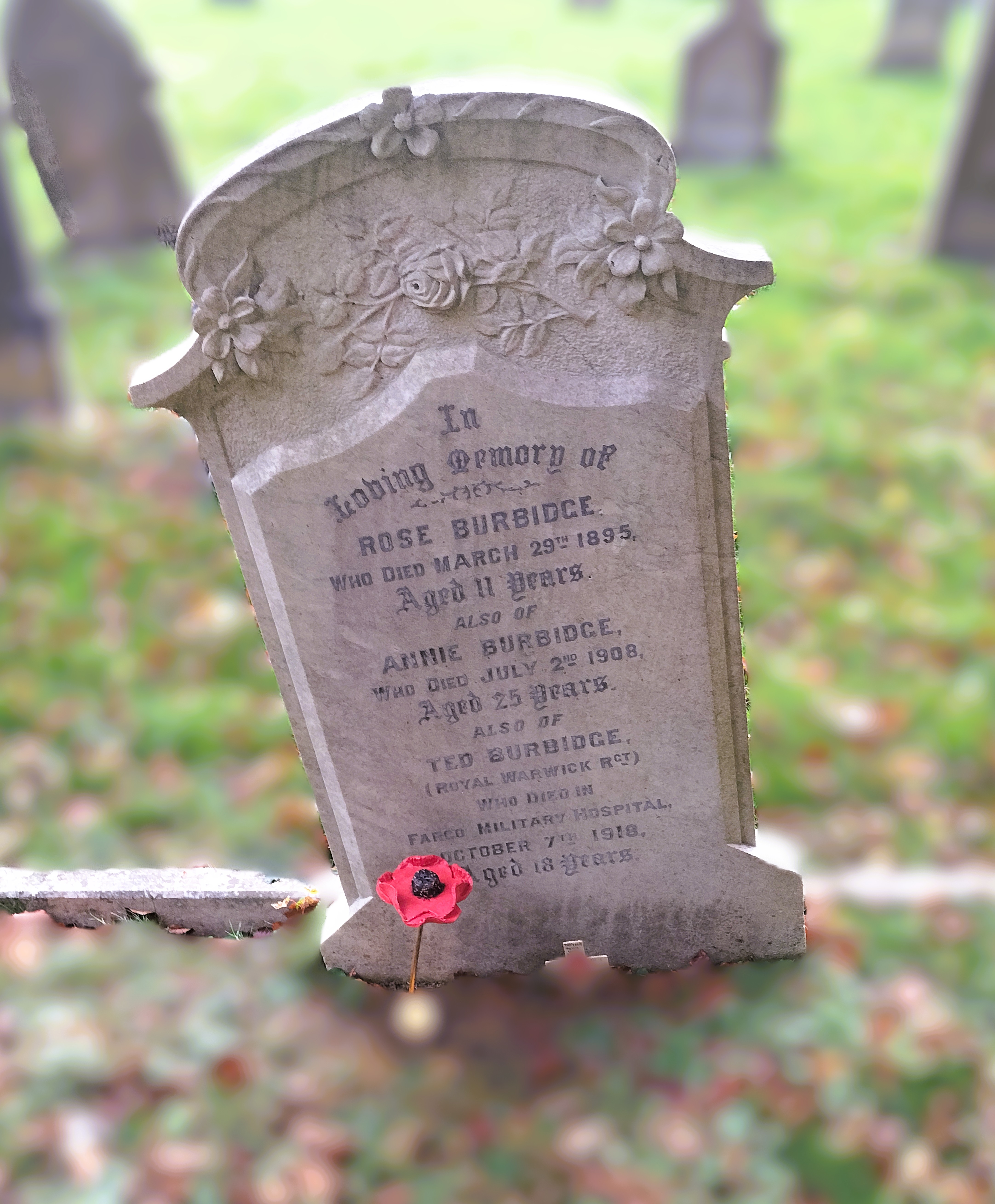
1 . PRIVATE EDWIN BURBIDGE

He was born in the summer of 1900, the youngest of nine children of William and Emily Burbidge of 7, Market Street, Chipping Norton. He was called up for service after turning 18 and joined the 53rd (Young Soldier) Battalion of the Royal Warwickshire Regiment. He was sent for training to Larkhill Garrison on Salisbury Plain. He was taken ill whilst serving there and admitted to Fargo Military Hospital in Amesbury, Wiltshire. Private Edwin Burbidge died there on 7th October 1918 from influenza and heart failure after only six weeks in the Army aged 18, the youngest man in the town to die in the war.
His older brother, Fred, served in The Royal Naval Air Service. He had a book of poetry called "Simple Verses" published posthumously in 1919. His work shows a sensitivity and compassion beyond his years.
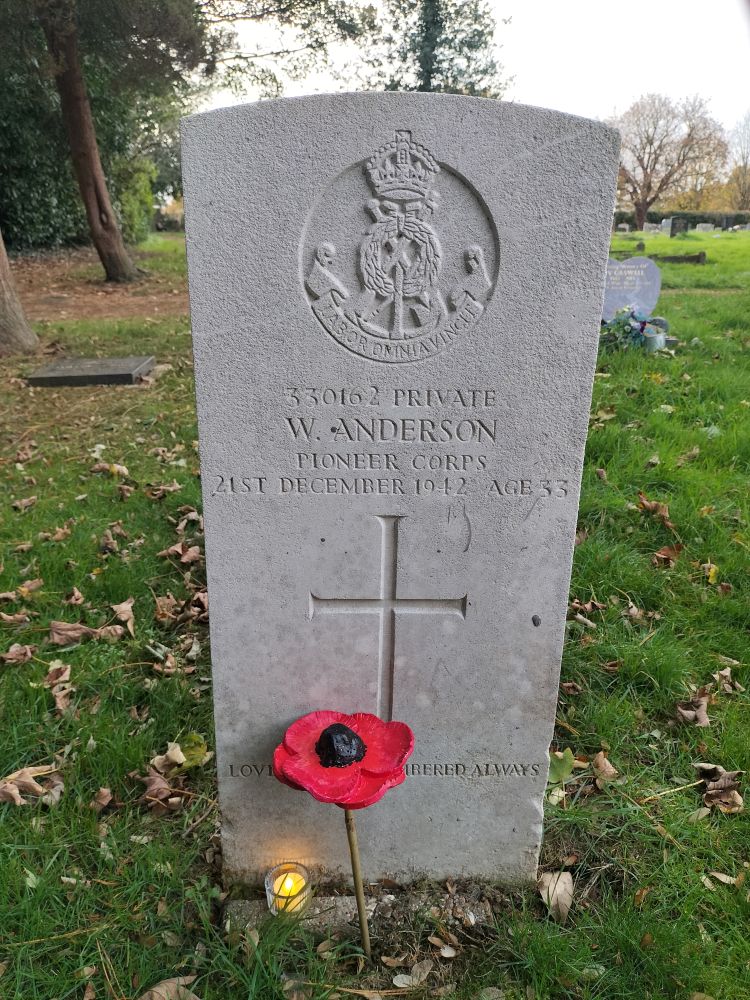
2, PRIVATE WILLIAM ANDERSON
He was the son of John and Elizabeth Anderson and the husband of Helen Rose Anderson, of Edinburgh. He was serving in the Pioneer Corps and was engaged in laying tarmac runways at Chipping Norton Relief Landing Ground. While travelling in the back of a lorry the tailgate came open and he fell onto the road, fracturing his skull. He died in Chipping Norton War Memorial Hospital on 21st December 1942 aged 33.
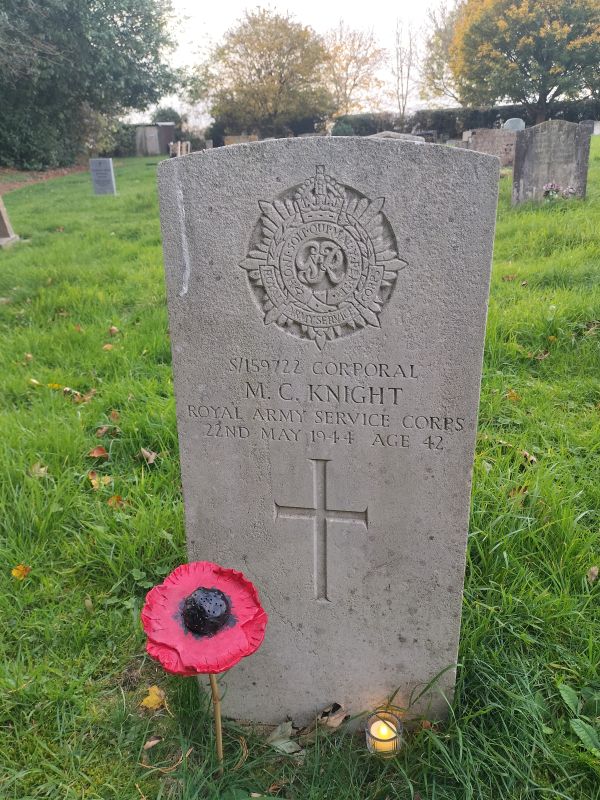
3. CORPORAL MAURICE CHARLES KNIGHT

He was born in Church Enstone to parents George and Sarah Knight in 1903. His father served with the 2nd Battalion, The Oxfordshire & Buckinghamshire Light Infantry in the First World War and was wounded in action during the Battles of Arras in April 1917. Maurice Knight married Ivy Gardner in 1931 in Enstone. They lived at 6 Hailey Avenue, Chipping Norton with their three children where he worked as a bricklayer. Corporal Maurice Knight was serving with the Army Service Corps when he died at home of pulmonary tuberculosis and exhaustion on 22nd May 1944 aged 42.
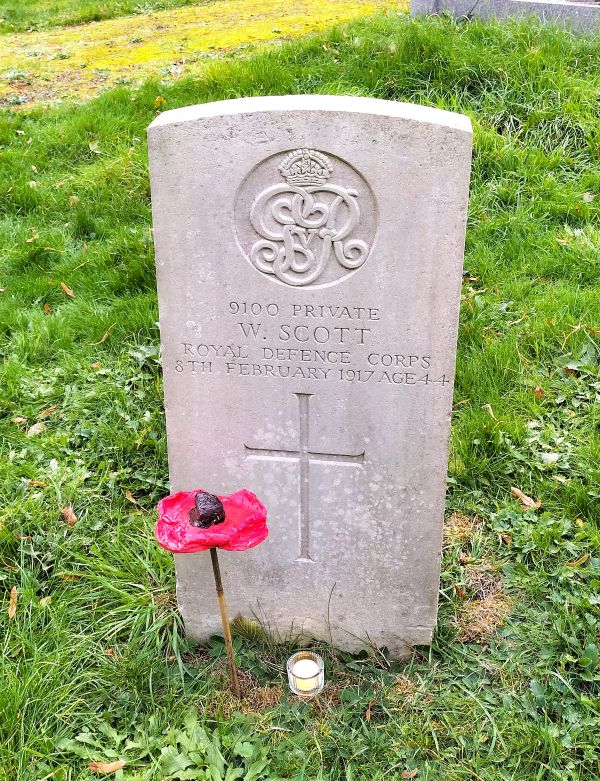
4. PRIVATE WILLIAM SCOTT

He was born in Liverpool in 1872 had come to Chipping Norton in 1890 to work as a blacksmith living in lodgings in Middle Row. He married Ellen Hurcomb in the town the following year. They had four children between 1892 and 1902 and first lived with her parents in 5, Alfred Terrace, and then in their own house at 11, Spring Place. In September 1914 he joined the 4th (Territorial) Battalion of The Oxfordshire & Buckinghamshire Light Infantry as a Private. He was transferred to the 258th Protection Company, The Royal Defence Corps, charged with protecting ports, railways and other installations in the UK. Private William Scott was serving at Southampton Docks when he died suddenly of heart failure brought on by valvular heart disease on 8th February 1917, aged 44. Ellen Scott died in 1944 aged 76.
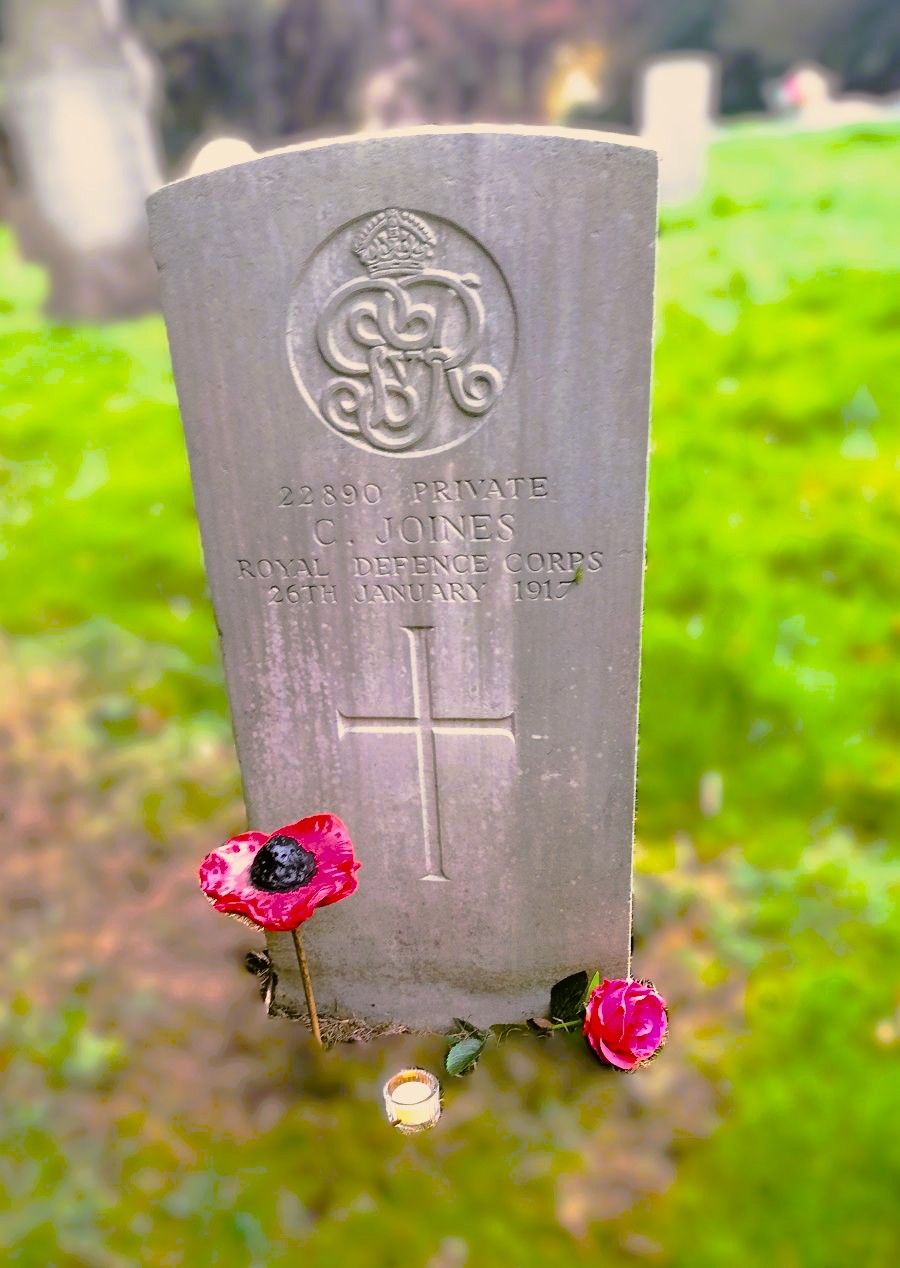
5. PRIVATE CHARLES DAVID JOINES
He was born in Bodicote in January 1856 and had worked as a farm labourer. When he married Sarah Padley in Chipping Norton in February 1875 he was working as a gasman and after living in Oxford settled at 67, Rock Hill, Chipping Norton where he worked as a bricklayer and mason and they had eight children together. He had also served as a part-time soldier with the 2nd Volunteer Battalion, the Oxfordshire Light Infantry which in 1908 had become the 4th (Territorial) Battalion, The Oxfordshire & Buckinghamshire Light Infantry. On 9th April 1915 he volunteered for a years service in the full time army, giving his age as 48 although he was actually 59, the upper age limit being 51. He was graded as B2, fit for service on the Home Front only and posted to the 62nd Protection Company of The Royal Defence Corps who were tasked with guarding railways, ports and other installations. He was stationed at the Channel port of Newhaven. In September 1916 he found that he could not swallow solid food and suffered from sickness and emaciation. He was admitted to No 2 General Hospital in Brighton, where he was diagnosed with an untreatable malignant oesophageal obstruction. He was discharged from hospital on 17th December 1916 and returned to Chipping Norton. He was discharged from the Army as being no longer fit for war service on 7th January 1917 and given the Silver War Badge given to honourably discharged soldiers to wear on civilian clothing to prevent them being accused of cowardice. Private Charles Joines died at home on 26th January 1917 aged 60.
His son Edward was killed in action on the Western Front in August 1917.
6. DRIVER SIDNEY ERIC DEE
He was born in Warwick in 1912 and married May Mills in 1932 in Chipping Norton and was father of two children, Edith Rose and Freda. They lived at 5, Hailey Road in Chipping Norton and Sidney worked as a builder's labourer. He was called up and served as a Driver with the Royal Army Service Corps and was still serving when he died of a heart attack at home in Hailey Road on 16th March 1946 in Chipping Norton.
.jpg?timestamp=1793995490705)
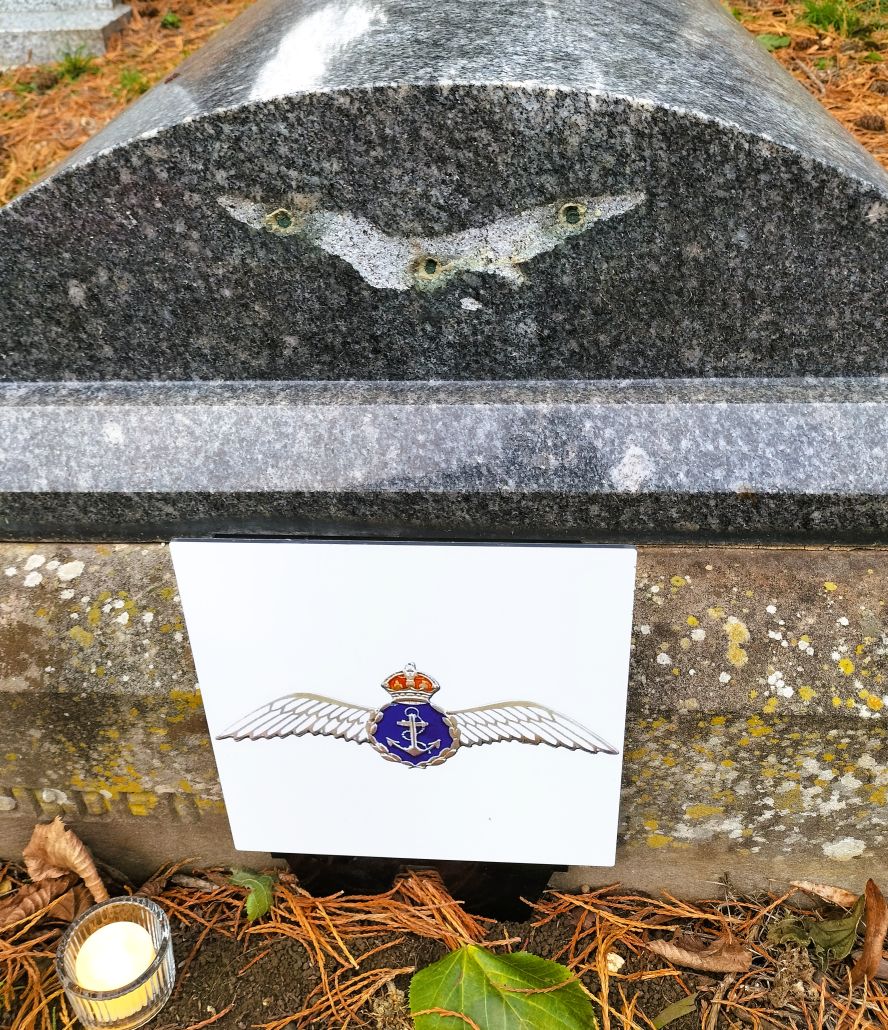
7. FLIGHT SUB LIEUTENANT HERBERT RUTTER SIMMS

He was born in Chipping Norton on 17th August 1891, the eldest son of Daniel and Ellen Simms of 13, High Street. His father was a watchmaker and jeweller and an Alderman of the town, as was his grandfather Charles Rice Simms. Herbert Simms left home in 1909 to become an apprentice with A. V. Roe at Manchester, helping build some of the early Avro aircraft. In June 1912 he began a flying course at Roe's Flying school at Brooklands, taking lessons in lieu of wages. He was awarded his certificate aged 21 after only 3 hours 10 minutes initial flying time.
In 1913 Herbert Simms joined the Royal Hellenic Navy under the command of Rear Admiral Mark Kerr and was responsible for servicing 2 seat trainers, seaplanes and flying boats of the Greek Navy Flying Corps. After the outbreak of war in 1914 Simms felt he should be doing more for war effort and in July 1915 applied and was accepted for a commission in the Royal Naval Air Service. In August 1915 he was posted to Chingford Naval Station, below, which was a training ground for aviators and in November 1915 sent to Dunkirk on active service joining No 1 Wing based at St Pol-du-Mer Airfield, flying two patrols a day. His first effort at flying a twin engined bomber ended disastrously, however, crashing on take-off. Herbert Simms had at least two kills. In Nieuport Type 11 Serial no. 3981 he shot down a LVG C11 at Dixmude on 29th February 1916, witnessed by Belgian troops in the trenches. In a Nieuport type 12 he shot down a FF33E seaplane attacking British ships near Zeebrugge on 24th April 1916 He also bombed a submarine off Ostend which he narrowly missed and flew fighting patrols to Ostend and Ypres.. On 15th May 1916 he was flying Nieuport Type 12 serial no. 8904, with his Observer Sub-Lieutenant Cyril Mullens on a patrol to protect the mine and net barrage of the Belgium coast. A German torpedo boat destroyer V47 was also working in the area protected by two seaplanes. At about 1220 Herbert Simms engaged one of the seaplanes, 638, but was hit by return fire from both the seaplane and the torpedo boat. The engine of his aircraft was stopped and it hit the sea, turned upside down and sank. The pilot of the seaplane went down to 150 feet to try and rescue the crew but was driven off by an approaching Royal Navy vessel. His body was recovered from the sea by a British ship and buried with full military honours,
The Roya; Navai Air Service wings oncw adorned his grave bur were stolenin rge 1970s. We have pkaced a etching of those wings in front of his grave.

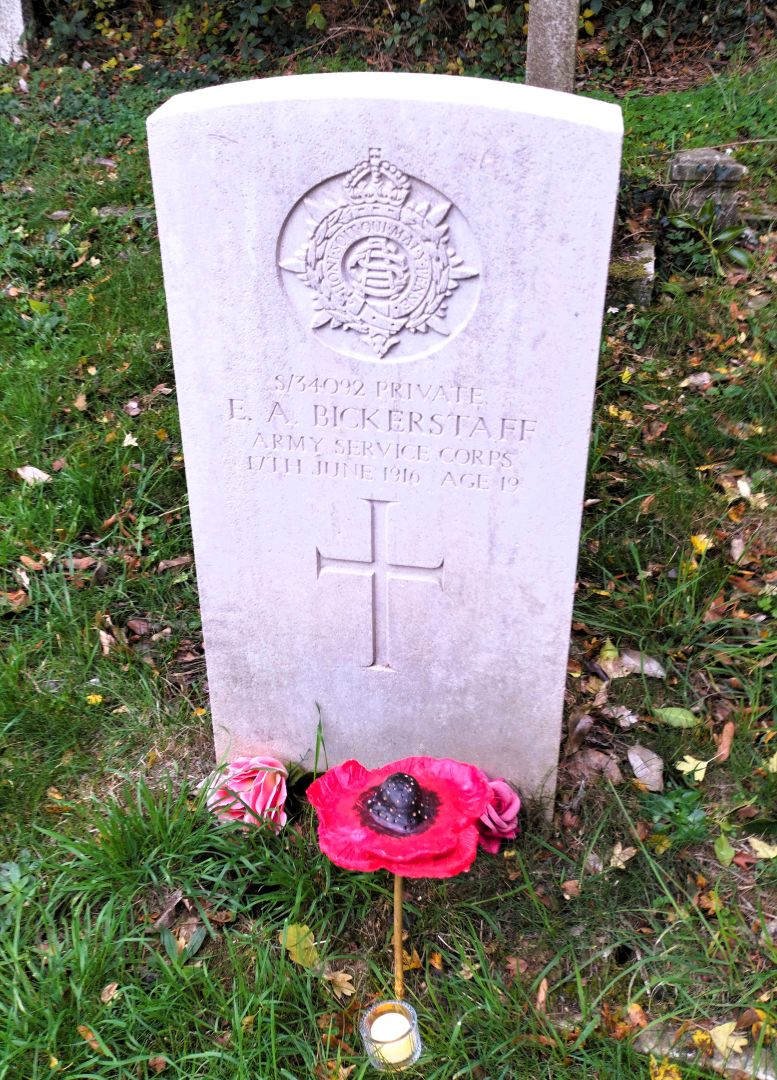
8. PRIVATE ERNEST ARTHUR BICKERSTAFF
He was born in Luton in October 1896, to parents Walter and Annie Bickerstaff, his mother having been born in Chipping Norton. After the death of his father, he and his mother returned to Chipping Norton living with his grandmother at 60, Rock Hill. He enlisted into the Army Service Corps at the outbreak of war as a Private and was posted to the 8th Forward Butchery Unit in France on 5th October 1914.
He was taken ill in the field and evacuated back to England and admitted to the County of London War Hospital in Epsom. Private Ernest Bickerstaff died there of tubercular peritonitis and pleurisy on 17th June 1916 aged 19.
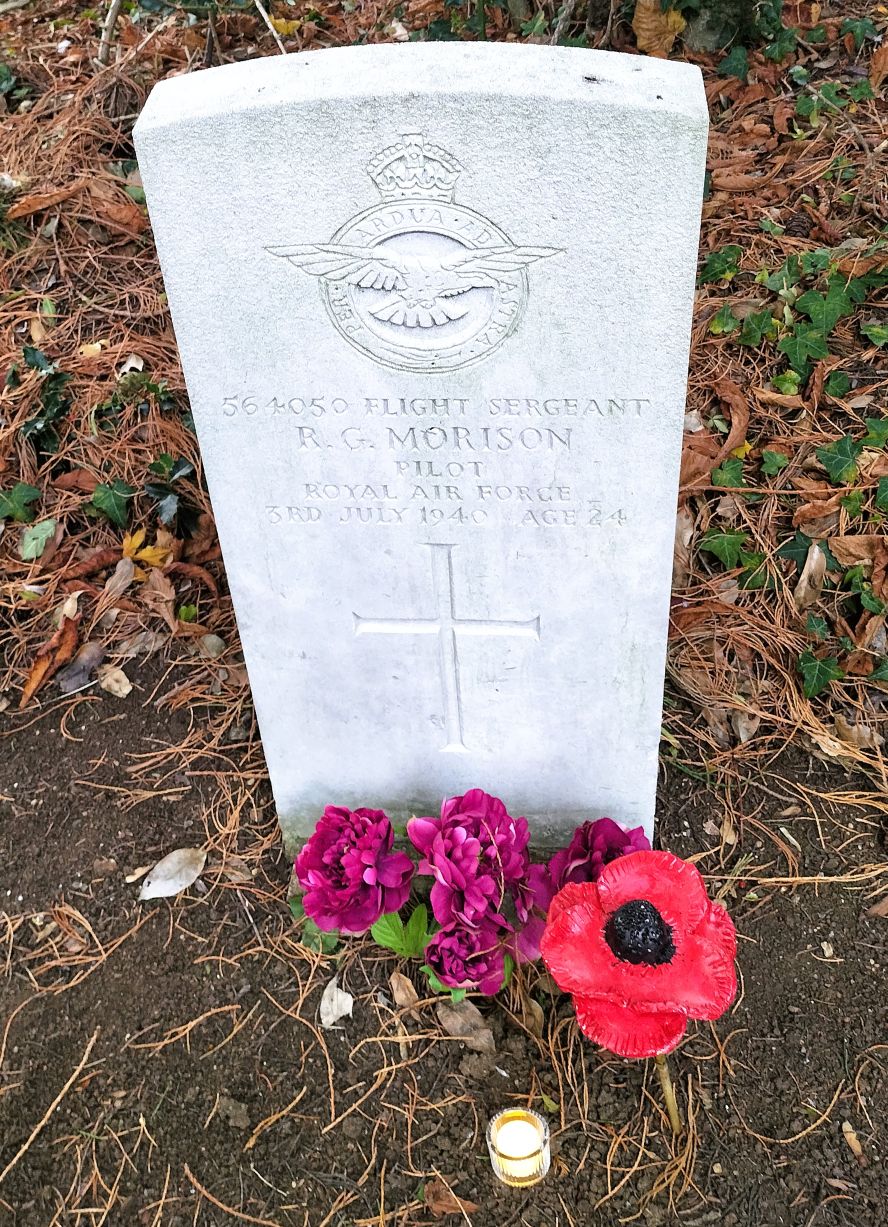
9. FLIGHT SERGEANT RODERICK GEORGE MORISON
He was born in Richmond, Surrey to parents Roderick and Ruth Morison and loined the Eoyal Air Force becoming a flying instructor. He was at the controls of Airspeed Oxford Mk 1 R6266, of 15 Flying Training School when it collided with a parked Oxford, N4580, whilst taking off at Chipping Norton airfield. Flight Sergeant Roderick Morison was killed in othe crash aged 24, His three passengers survived the crash.
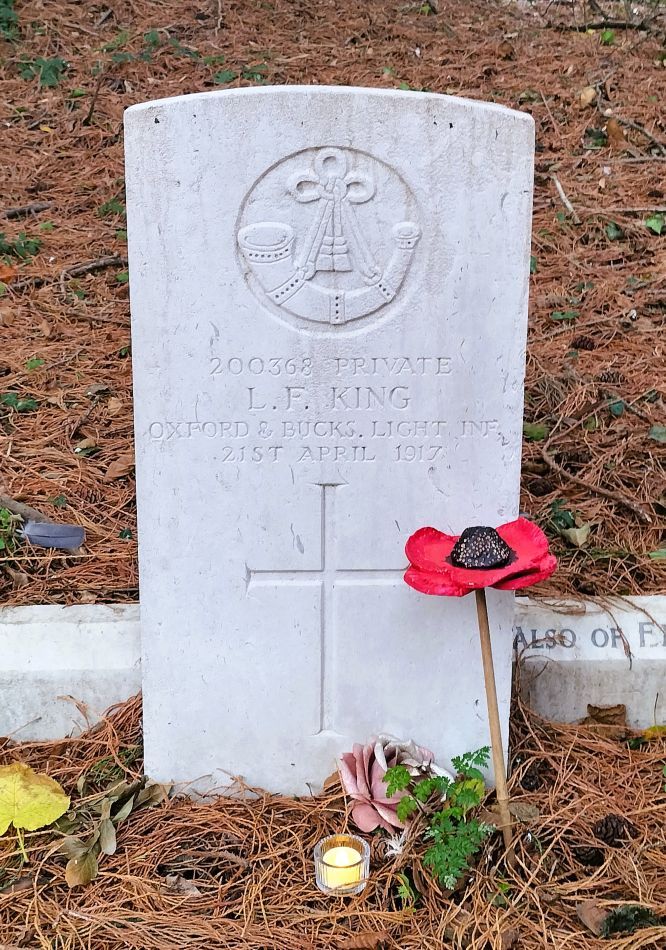
10. PRIVATE LESLIE FREDERICK KING
He was born in April 1898, the son of Frederick and Emily King of 12, Church Street, Chipping Norton.
He enlisted into the 4th (Territorial) Battalion, The Oxfordshire & Buckinghamshire Light Infantry, as a Private, at the outbreak of the war in August 1914. He served on the Home Front until being embodied into the 2/4th Battalion, The Oxfordshire & Buckinghamshire Light Infantry and sent to France with his Battalion on 21st May 1916. On 19th July 1916 they took part in the Attack on Fromelles, a disastrous and costly diversionary attack during the Somme Offensive. Private Leslie King was later taken ill in the field and evacuated back to England for treatment. He died in Boscombe Military Hospital on 19th September 1917 from pulmonary meningitis and exhaustion, aged 19.
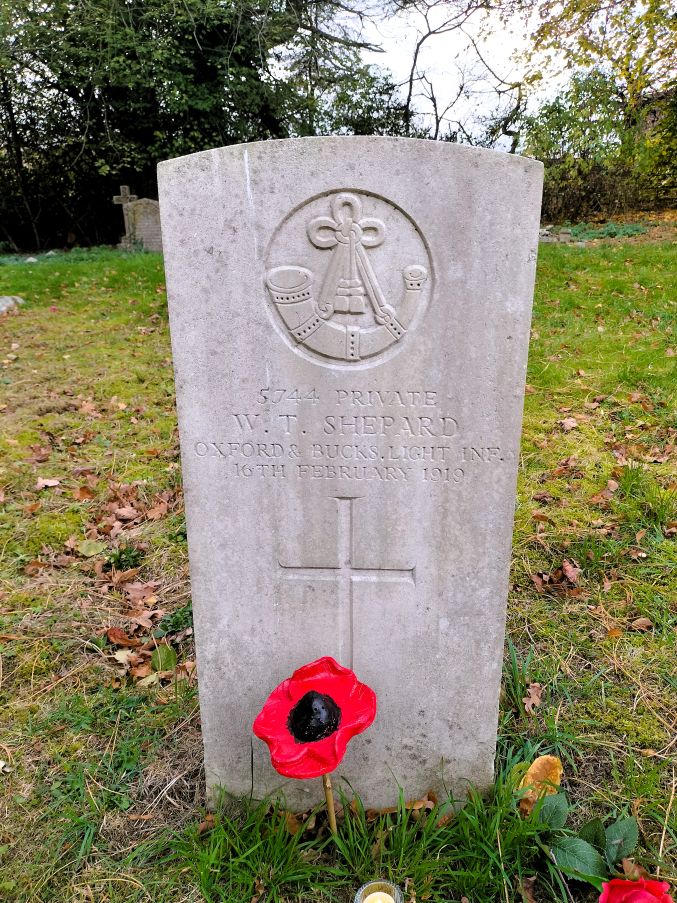
11. PRIVATE WILLIAM THOMAS SHEPARD
He was born in November 1890, the son of John and Emma Shepard of 36, Rock Hill, Chipping Norton and had worked as a drayman at Hitchmans brewery. He had enlisted into the 4th (Territorial) Battalion of The Oxfordshire & Buckinghamshire Light Infantry, serving on the home front. He then transferred to the 646th Agricultural Company, The Labour Corps. He died in the 3rd South General Hospital in Oxford of pneumonia and exhaustion on 16th February 1919 aged 28.
12. PRIVATE ERNEST KEEN
He was born in April 1887 to parents Walter and Edith Keen of 10, Finsbury Place, Chipping Norton. He had been a factory worker when he enlisted into the Worcestershire Regiment. Being fit for Home Service only, he was transferred to the Hampshire Regiment and then to the 661st Agricultural Company of the Labour Corps. Private Ernest Keen died in the Peterborough Infirmary from influenza and pneumonia on 1st November 1918, aged 32.
His elder brother Albert had served on the Western Front with the Royal Warwickshire Regiment and taken prisoner of war and died in 1920 aged 40.